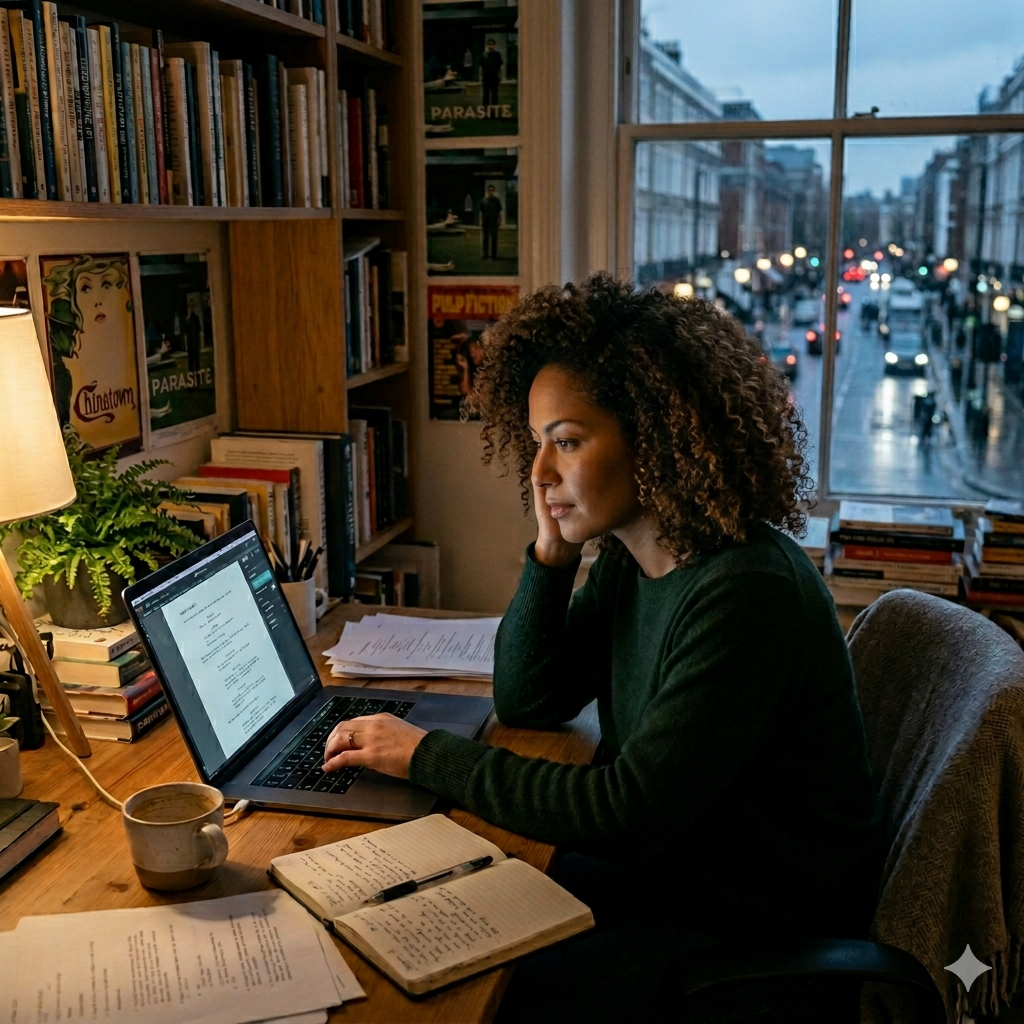
AI in Screenwriting: Tool or Threat to Creativity?
Artificial intelligence is no longer a distant concept in Hollywood—it’s here, embedded in the creative process, quietly reshaping how stories are developed, written, and produced.
From indie filmmakers to studio-backed writers’ rooms, AI is becoming part of the workflow. But with that shift comes a growing tension:
Is AI helping writers—or replacing them?
The Rise of AI Tools
Screenwriting has always been a blend of structure and imagination. Now, AI is stepping into that balance.
Writers are using tools like ChatGPT and Final Draft to:
- Generate story ideas and concepts
- Build outlines and beat sheets
- Refine dialogue and pacing
What once took days can now take hours. What once required a full writers’ room can now begin with a single prompt.
For independent creators especially, AI is leveling the playing field—giving them access to tools that accelerate development without increasing budgets.
But speed comes with a cost.
The Creative Debate
At the heart of the conversation is a fundamental question:
Can a machine truly understand human storytelling?
Critics argue that it can’t.
They point out that:
- AI lacks lived experience
- It pulls from existing data rather than original thought
- It risks creating stories that feel formulaic or derivative
In other words, AI can mimic structure—but not soul.
Supporters see it differently.
They argue:
- AI is no different than any other creative tool
- Writers still shape the narrative, voice, and emotion
- It enhances productivity without replacing creativity
To them, AI isn’t the writer—it’s the assistant.
Where It Gets Complicated
The real tension isn’t just creative—it’s ethical and economic.
Questions are emerging across the industry:
- Who owns AI-assisted scripts?
- Should AI-generated content be credited—or disclosed?
- What happens when studios prioritize speed over originality?
These aren’t hypothetical concerns. They’re already influencing negotiations, contracts, and the future of writers’ rights.
Organizations like the Writers Guild of America have pushed back against unrestricted AI use, advocating for protections that ensure writers remain at the center of the creative process.
Because at stake isn’t just how scripts are written—it’s who gets paid, credited, and replaced.
The Industry Shift
AI is also changing how projects get made.
Producers can now:
- Evaluate concepts faster
- Generate multiple script variations
- Test story ideas before committing resources
For studios, that means efficiency.
For writers, it means competition—not just from other writers, but from technology itself.
At the same time, indie creators are using AI to do more with less:
- Writing scripts without a full team
- Iterating ideas quickly
- Bringing projects to life faster
This dual reality is what makes AI both powerful—and polarizing.
What This Means for Writers
The writers who will thrive in this new era aren’t the ones who resist AI completely—or rely on it entirely.
They’re the ones who:
- Use AI to enhance, not replace, their voice
- Focus on originality, perspective, and lived experience
- Understand story at a deeper level than any algorithm can replicate
Because while AI can generate content, it can’t generate perspective.
And perspective is what makes stories matter.
The Bottom Line
AI won’t replace great writers.
But it will change what it means to be one.
In this new landscape, the advantage goes to those who can combine technology with authenticity—who can move faster without losing their voice, and innovate without sacrificing originality.
The future of screenwriting isn’t human vs machine.
It’s human with machine.
And the writers who figure that out first won’t just survive—they’ll lead.
About The Author