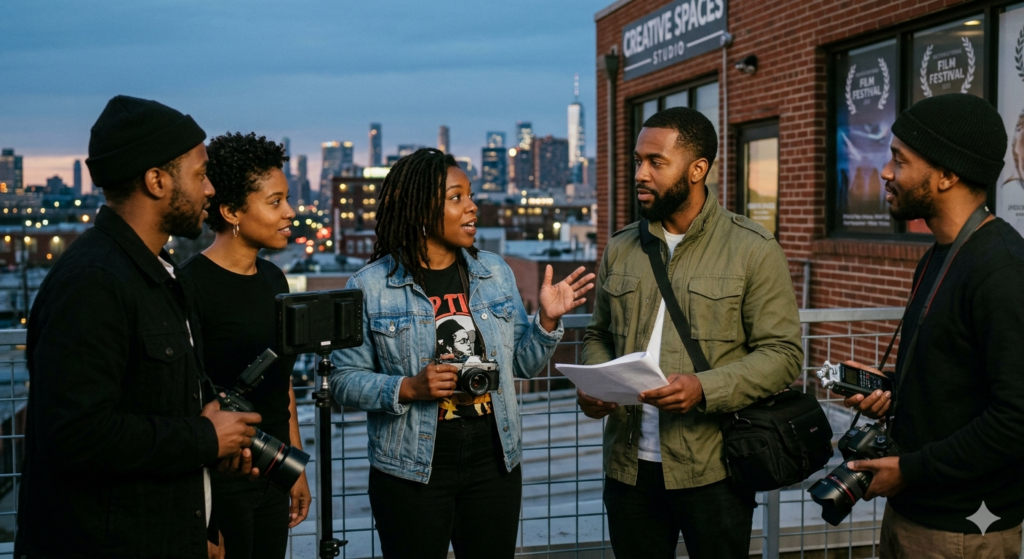
New Wave Cinema: The Top 10 Independent Black Filmmakers Changing the Game
Independent cinema has always been a space where truth lives unfiltered—but today, a powerful wave of Black filmmakers is not just participating in that space—they’re redefining it. From festival darlings to award-season disruptors, these storytellers are crafting bold narratives that are reshaping culture, commerce, and creativity.
Here are ten independent Black filmmakers making major waves right now—and the films proving their impact.
1. Ryan Coogler
Notable Film: Sinners (2025)
Few filmmakers have successfully balanced independent roots with global dominance like Ryan Coogler. His latest project, Sinners, has become a cultural and critical phenomenon—breaking award records and earning historic recognition across major ceremonies. (Wikipedia)
Even with blockbuster success, Coogler’s storytelling DNA remains grounded in indie sensibilities—character-driven, socially aware, and visually bold.
2. Ava DuVernay
Notable Film: Origin (2023) / When They See Us
Ava DuVernay continues to be a pillar of independent Black cinema, building pathways for other creators through both her films and her distribution work. From historical narratives to social justice storytelling, her voice remains one of the most influential in modern filmmaking.
3. Elegance Bratton
Notable Film: Move Ya Body: The Birth of House
Bratton is carving out a lane in documentary and narrative filmmaking, highlighting Black culture with energy and authenticity. His recent work has gained attention on the festival circuit, especially at Sundance. (BET)
4. Akinola Davies Jr.
Notable Film: My Father’s Shadow
An emerging force in global indie cinema, Davies blends personal storytelling with cultural identity. His debut feature has already earned major awards recognition, signaling a filmmaker with long-term impact. (Wikipedia)
5. Rachael Abigail Holder
Notable Film: Love, Brooklyn
Holder’s storytelling explores relationships, identity, and modern Black life with nuance. Her work represents a new generation of filmmakers embracing intimacy over spectacle. (BET)
6. Ahmir “Questlove” Thompson
Notable Film: SLY LIVES! (aka The Burden of Black Genius)
Already an Academy Award-winning director, Questlove continues to elevate documentary filmmaking by blending music, history, and cultural commentary into compelling cinematic experiences. (BET)
7. Brittany Shyne
Notable Film: Seeds
Shyne’s work captures the poetry of everyday Black life, particularly in rural and underrepresented spaces. Her storytelling feels both intimate and expansive, making her one to watch in the indie space. (BET)
8. Rashad Frett
Notable Film: Ricky
Frett is part of a new class of filmmakers exploring identity, vulnerability, and masculinity through deeply personal narratives. His work has resonated strongly within festival audiences. (BET)
9. Mark Anthony Green
Notable Film: Opus
A former journalist turned filmmaker, Green brings a sharp, stylish perspective to storytelling. His transition into film signals a crossover of media voices reshaping cinema language. (BET)
10. Maia Lekow
Notable Film: How to Build a Library
Lekow’s work in documentary storytelling reflects a global perspective on Black identity, history, and knowledge systems—expanding what Black independent cinema looks like beyond American borders. (BET)
More Than a Moment—A Movement
Film festivals like Sundance continue to amplify Black independent voices, showcasing a wide range of stories—from experimental shorts to powerful feature films that challenge traditional narratives. (Essence)
What’s most striking about this current wave isn’t just the talent—it’s the diversity of perspective. These filmmakers are telling stories across genres: horror, romance, documentary, musical, and experimental film. They’re not confined to one lane—they’re building entire highways.
The Business of Independence
The rise of streaming platforms, social media, and direct-to-audience distribution has allowed these filmmakers to bypass traditional gatekeepers. Many are leveraging independent success into larger opportunities—while still maintaining creative control.
And that’s the key difference: ownership.
These creators aren’t just making films—they’re building ecosystems.
Final Take
The new generation of independent Black filmmakers isn’t waiting for permission—they’re setting the agenda. Their films are winning awards, driving conversations, and proving that authentic storytelling will always find its audience.
If Hollywood is paying attention—and it should be—the future of cinema isn’t just diverse.
It’s independent.
And it’s unapologetically Black.
About The Author